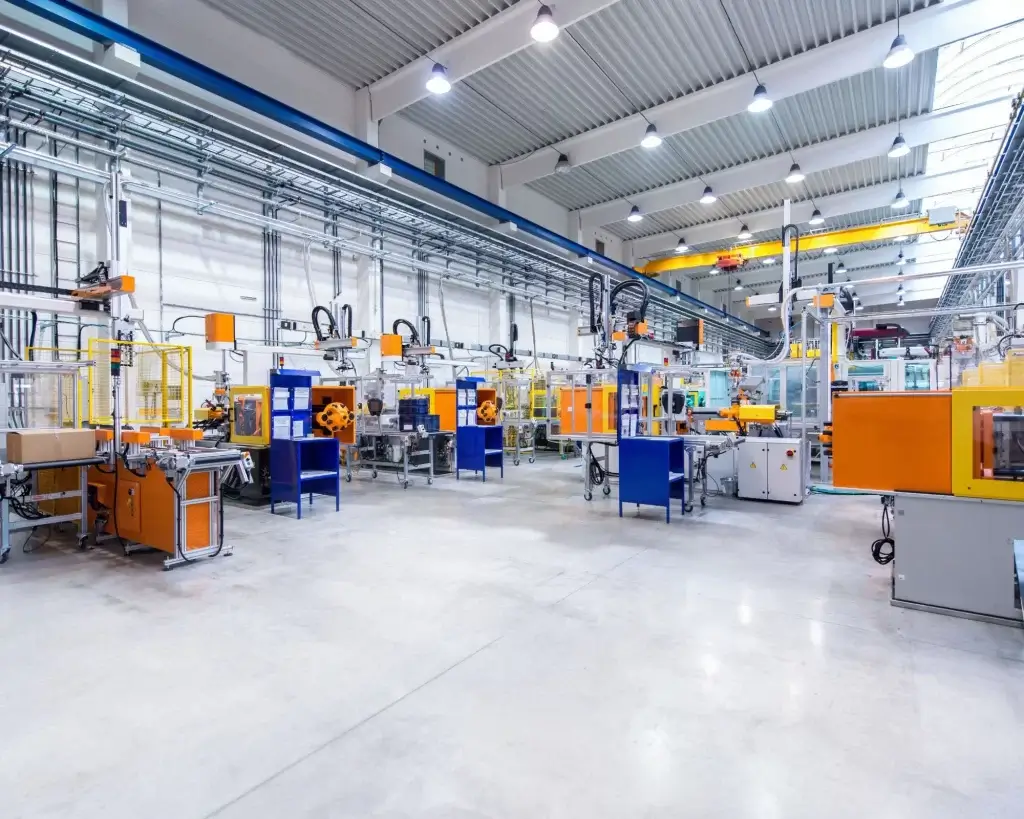
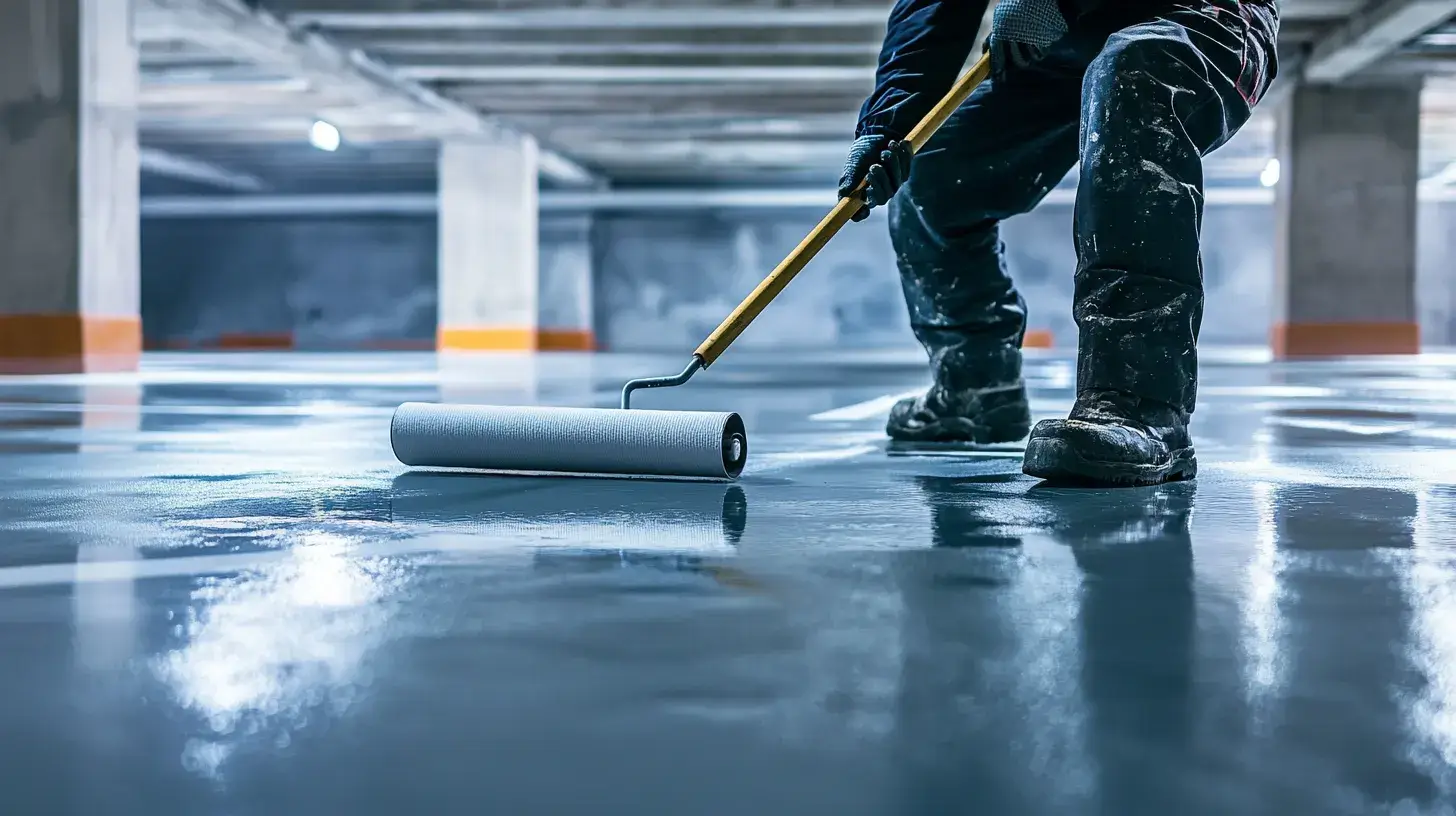
When it comes to industrial flooring, durability, safety, and ease of maintenance should always be the top priorities. Industrial floor coatings play a crucial role in protecting concrete surfaces from heavy machinery, chemical spills, foot traffic, and environmental wear. The right coating not only extends the life of the floor but also improves functionality and appearance.
This guide walks through the 4 Types of Industrial Floor Coatings commonly used across India and globally, helping facility managers make informed decisions based on operational needs.
1. Epoxy Floor Coatings
Among the most versatile solutions in the 4 Types of Industrial Floor Coatings, epoxy floor coatings often come first. Made from epoxy resins and hardeners, they create a seamless, high-strength surface that bonds firmly with concrete.
Why Epoxy Stands Out:
- ✓ Exceptional resistance to chemicals, oil, and moisture
- ✓ High durability under heavy machinery and traffic
- ✓ Attractive glossy finish that improves visibility
- ✓ Easy to clean and maintain
- ✓ Strong abrasion resistance
Epoxy floors are ideal for factories, warehouses, garages, food processing areas, and pharmaceutical plants. They are also available in decorative variants with flakes or coloured quartz for enhanced aesthetics.
For long-term protection with minimal maintenance, epoxy remains one of the most reliable choices among the 4 Types of Industrial Floor Coatings.
2. PU Thin Coat Floor Coatings
Another option worth considering when discussing the 4 Types of Industrial Floor Coatings is the polyurethane (PU) thin coat system. These coatings offer improved flexibility and abrasion resistance, especially in environments that experience moderate stress and temperature changes.
Why PU Thin Coat Works Well:
- ✓ Good chemical resistance
- ✓ Flexible and crack-resistant
✓ Smooth and hygienic finish
- ✓ Suitable for indoor industrial applications
PU thin coat systems perform well in manufacturing units, storage facilities, and light industrial spaces where both flexibility and performance are important.
3. PU Concrete (Cementitious Urethane) Floor Coatings
When facilities require heavy-duty performance, PU Concrete, also known as cementitious urethane flooring, is often recommended. Among the 4 Types of Industrial Floor Coatings, this is one of the toughest systems available.
It combines cement, aggregates, and polyurethane to form a dense, impact-resistant surface designed for extreme environments.
Why PU Concrete is Highly Effective:
- ✓ Extremely resistant to thermal shock
- ✓ Withstands heavy mechanical loads
- ✓ Excellent chemical resistance
- ✓ Anti-slip and hygienic properties
- ✓ Ideal for wet and hot processing areas
PU Concrete performs exceptionally well in breweries, dairy plants, commercial kitchens, pharmaceutical facilities, and food manufacturing units, especially in areas exposed to hot water washdowns and aggressive chemicals.
4. ESD (Anti-Static) Floor Coatings
The fourth category in the 4 Types of Industrial Floor Coatings is ESD (Electrostatic Discharge) flooring. Whenever static electricity poses a risk to sensitive equipment or safety, this is the recommended solution.
Why ESD Flooring is Essential:
- ✓ Controls static discharge
- ✓ Protects sensitive electronic components
- ✓ Ideal for cleanrooms and electronics manufacturing
- ✓ Durable and chemically resistant
ESD flooring is essential for electronics manufacturing, defence production, laboratories, and pharmaceutical industries where electrostatic control is critical for safety and compliance.
Key Benefits
Good Chemical and Abrasion Resistance
PU floor coatings offer reliable protection against a wide range of industrial chemicals, including mild acids, alkalis, solvents, oils, and cleaning agents. This makes them well suited for environments where occasional spills and regular washdowns are part of daily operations. Alongside chemical resistance, these coatings stand up to abrasion from foot traffic, trolley movement, and light machinery without showing premature wear. The result is a surface that retains its finish and structural integrity for years, reducing the need for frequent repairs or recoating.
UV-Stable and Resistant to Yellowing (Applicable only for Aliphatic PU)
Aliphatic polyurethane coatings are formulated to withstand prolonged exposure to ultraviolet light without losing colour or clarity. Unlike standard coatings that tend to yellow or fade when exposed to sunlight, aliphatic PU retains its original appearance over time, making it ideal for areas with natural light exposure, entranceways, outdoor-facing zones, and facilities where visual consistency matters. This UV stability also helps preserve branded colours, safety line markings, and decorative finishes, keeping the floor looking as intended well into its service life.

How to Choose Among the 4 Types of Industrial Floor Coatings
When selecting the right solution from the 4 Types of Industrial Floor Coatings, key factors to evaluate include:
- ✓ Nature of operations – chemical exposure, temperature changes, and load intensity
- ✓ Hygiene requirements – especially in food, beverage, and pharmaceutical environments
- ✓ Aesthetic expectations – particularly for customer-facing facilities
- ✓ Budget and downtime tolerance – balancing upfront cost with long-term value
Consulting a floor coating specialist is always advisable to ensure the chosen system aligns perfectly with operational demands.
How to Maintain Industrial Floor Coatings
To maximize the lifespan of any of the 4 Types of Industrial Floor Coatings, the following best practices are recommended:
- ✓ Regular cleaning with mild, coating-safe detergents
- ✓ Avoiding abrasive scrubbing methods
- ✓ Conducting periodic inspections for cracks or surface wear
- ✓ Re-coating when necessary to maintain optimal performance
With proper maintenance, industrial floor coatings can last anywhere between 5 to 20 years, depending on usage conditions.
Conclusion
Understanding the 4 Types of Industrial Floor Coatings helps facility managers make smarter, long-term decisions for industrial spaces. Whether the choice is epoxy for versatility, PU thin coat for flexibility, PU concrete for heavy-duty performance, or ESD systems for static control, each option serves a specific purpose.
By carefully evaluating operational needs and selecting the right system from the 4 Types of Industrial Floor Coatings, businesses can ensure enhanced durability, safety, hygiene, and long-term cost efficiency.
For those exploring the 4 Types of Industrial Floor Coatings for their facility, expert guidance is strongly recommended to ensure investment in a solution engineered for long-lasting industrial performance.