Ever faced a pipe leak right after tightening it perfectly? That tiny gap can cost significantly in terms of downtime and safety.
The main problem isn’t the tool or the torque; it’s improper sealing. That’s where understanding what thread sealant is becomes crucial.
Thread sealants are specially formulated compounds designed to fill hidden gaps in threaded connections. They lock in pressure, prevent leaks, and protect against corrosion, ensuring your assembly stays secure under demanding conditions.
However, using the wrong sealant can cause more harm than good. It can interfere with assembly, lead to contamination, or even fail under high-pressure loads.
For manufacturers and automotive OEMs like you, choosing the proper thread sealant isn’t just a maintenance choice; it’s a key factor in ensuring long-term process reliability and performance.
At Chembond Material Technology, we help you choose and apply sealants that match your systems, pressures, and performance needs with expert guidance.
Definition and Role of Thread Sealant
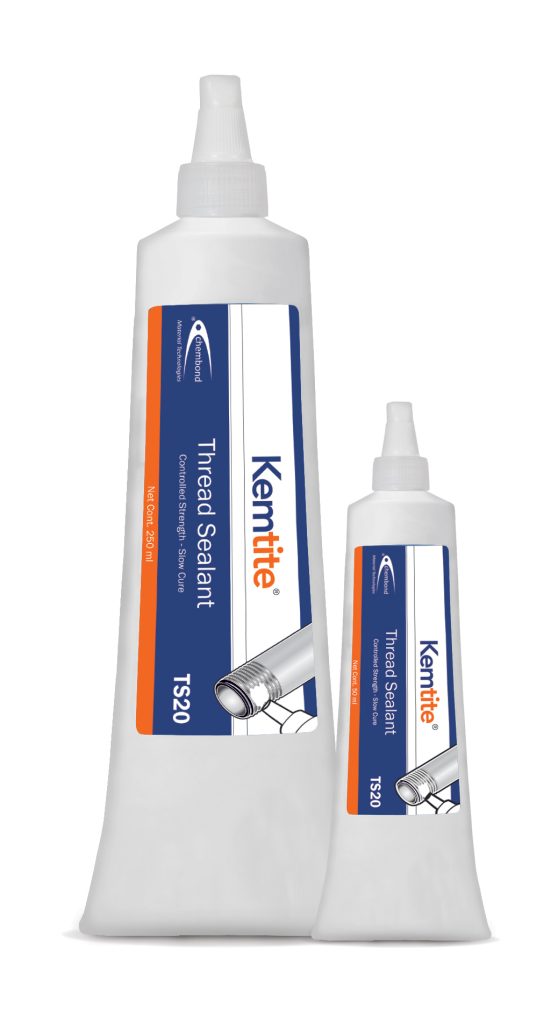
What is Thread Sealant
A thread sealant does much more than fill a gap-it protects against costly surprises like leaks and corrosion.
It works by creating a durable bond across thread valleys, locking in pressure and resisting fluid seepage.
Industrial units and home repairs rely on it to ensure fittings stay firmly in place.
Whether it’s gas, oil, or water, without the right sealant, tightened threads alone cannot deliver lasting results.
Benefits and Functions
Thread sealants offer peace of mind by making fluid and gas systems truly secure.
They shield against vibration and high pressure, helping prevent joint loosening and fluid loss.
This protection also extends thread life and wards off corrosion caused by moisture or aggressive media.
Well-sealed threads mean fewer breakdowns, fewer repairs, and safer operations-especially in industries where pressure surges are routine.
Types and Forms of Thread Sealants
Types by Chemical Composition
Each type of thread sealant comes with its own strengths, chosen based on specific needs.
PTFE sealants, often known for their slick texture, are suitable for common household plumbing.
Anaerobic variants only cure in the absence of air, making them great for high-pressure seals.
Wax-based sealants, although older in use, still serve in applications needing minimal setup or cleaning.
Types by Form
Application style also makes a difference-paste or liquid forms are easier to apply to irregular threads.
They’re better for precision work.
Teflon tape is handy and clean, but less reliable in high-vibration or high-pressure environments.
Choosing between tape and liquid often depends on available tools and the stress the joint will face.
Applications of Thread Sealants
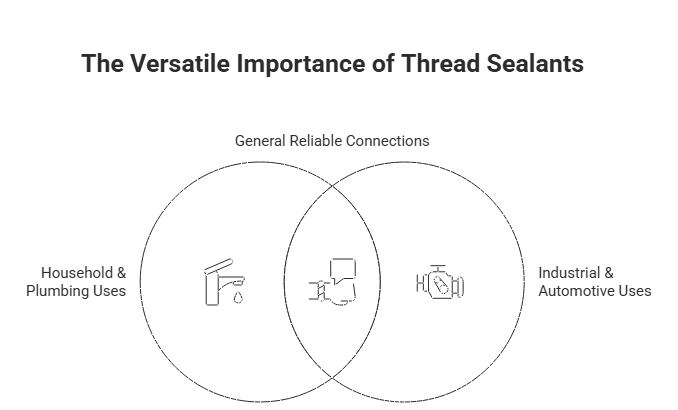
Household and Plumbing Uses
From fixing leaky taps to installing bath fittings, thread sealants are a saver in daily home fixes.
They offer a tight lock, keeping water inside the pipe and not on your bathroom floor.
They work well even for potable water lines, making them safe and efficient for everyday use.
Quick home DIY tips: always clean threads and apply evenly to avoid overbuild.
Industrial and Automotive Applications
Industry settings test fittings through heat, vibration, and constant pressure changes.
Thread sealants for engines, oil lines, and brake systems prevent failure in these critical areas.
For hydraulic fittings, sealants help maintain system integrity over cycles of use, keeping fluids where they belong.
It helps reduce downtime while maintaining safe and precise operations.
Specialised Uses
In the food and marine sectors, sealants play a bigger role-they must meet safety and durability norms.
Food-grade sealants are specifically designed to resist fermentation, pressure, and the effects of cleaning chemicals.
Marine and aircraft environments are exposed to corrosive salt air or unstable pressure.
Sealants here must resist harsh chemicals, support structural integrity, and perform under extreme temperature shifts.
How to Use Thread Sealant
Application Techniques
Always start with thoroughly cleaned, oil-free threads to allow proper bonding.
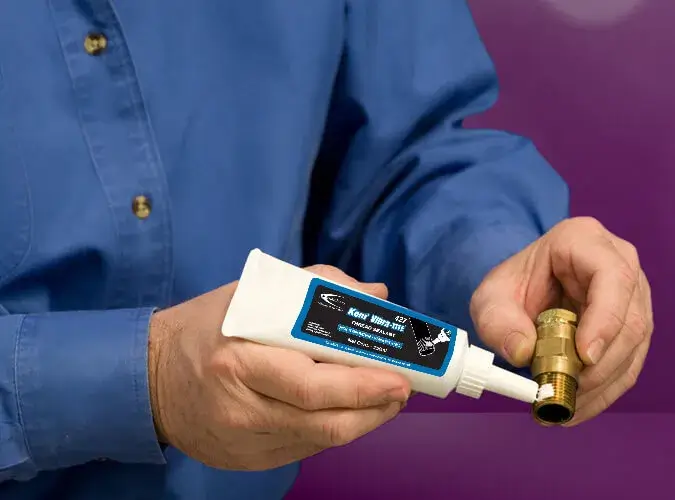
Apply the sealant with uniform strokes across the male threads-avoid the first two for precise fitting.
When everything is aligned, tightening seals the joint completely.
Air-tightness is achieved only when the sealant spreads evenly and fills every gap.
Removal and Maintenance
Removing old thread sealant calls for solvents or mechanical tools, depending on the sealant type.
Scratches during removal can affect resealing, so surface checks are necessary.
During rework, avoid contaminants and re-prep with fresh cleaning.
Only reapply sealant after assessing thread damage and ensuring compatibility.
Performance and Safety Considerations
Performance Metrics
The curing time varies; some sealants require just an hour, while others need longer, depending on the temperature and thread material.
For high or low-temperature systems, always check tolerance limits before use.
Resistance against fuels, oils, and harsh cleaners is critical in industrial use.
Solvent resistance plays a major role in performance, especially where frequent maintenance is required.
Health and Safety
Always wear gloves and eye protection when handling, even with food-grade options, as they require cautious use.
Look for amine-free and VOC-compliant types that improve indoor air quality.
Used product scraps should be placed in chemical waste bins.
Following labelled directions ensures both safety and longevity during application and removal.
Choosing the Right Thread Sealant
Factors to Consider
Every thread isn’t built alike, nor is every sealant. Check the application temperature, fluid type, and thread material first.
Quality options typically list necessary certifications, such as ISO for product performance assurance.
For professional jobs, sealants must comply with application and safety parameters.
These checks also prevent costly material damage in the future.
Material-Specific Choices
Metal threads need a different bonding chemistry than plastic, which can crack under strong adhesives.
We offer sealants suited to both, while also considering corrosion or aggressive fluid contact.
For fuel or gas, pick products marked explicitly for such applications to avoid hazards.
Sealant strength and elasticity must be tailored to the specific material, making careful product matching crucial.
Thread Sealant Brands and Products
Notable Manufacturers
We at ChemBond Material Technologies partner with ND Industries to bring the most reliable Kem Vibra-Tite solutions.
Our LOCTITE-class anaerobic adhesives address a wide range of applications, from threads to retaining compounds.
GORE sealants are designed with high-grade PTFE for smoother installations.
Rectorseal suits domestic fittings, especially for plumbing and HVAC systems, where ease of use matters.
Brand-Specific Applications
T plus 2 works well for general-purpose sealing, though it may not perform in chemically sensitive applications.
In ISO-certified plants, choosing based on brand credibility simplifies audits and procurement.
We ensure all products are traceable and quality checked from source to application.
Our product lineup supports both small businesses and large industrial plants equally.
Frequently Asked Questions
What is the best thread sealant for potable water?
Use a certified food-safe or potable-water-grade PTFE-based sealant or plumber’s tape labelled for drinking water; always check certification and temperature limits.
Can I use PTFE tape on hydraulic fittings?
PTFE tape can work for low-pressure lines, but for high-pressure hydraulic fittings, an anaerobic or liquid paste sealant designed for hydraulic systems is recommended.
How long does a thread sealant take to cure?
Cure time varies: quick-setting pastes may set in 1 hour, while anaerobic adhesives often require 24 hours for full strength. Temperature and thread material affect curing.
How do I remove old thread sealant?
Use the manufacturer-recommended solvent or mechanical scraping. Avoid damaging threads; clean thoroughly before reapplying new sealant.