
The wrong coating may not seem like a big deal when it fails, but your maintenance budget will.
Across industries, a single coating mistake can shut down an entire process line, corrode through steel supports, or trigger safety violations that cost far more than the product ever saves. From delays in construction to hazardous leaks in chemical plants, the consequences pile up fast.
We’ve seen it firsthand, poor surface prep, mismatched materials, coatings applied without understanding what they’re up against. That’s why this guide exists.
This isn’t a sales pitch or a chemistry lecture. It’s a practical roadmap to help you choose an industrial coating that actually fits the job, based on where it’s going, what it’s facing, and how long it needs to last.
What Industrial Coatings Are Supposed to Do
An industrial coating isn’t a layer of paint. It’s a line of defence. And depending on the job site, that line holds off anything from corrosive vapours and abrasive slurries to 600°C furnace heat or tropical humidity that creeps through every joint.
The goal? Protect the substrate, reduce failure risk, and extend service life, without creating extra downtime.
A well-chosen coating can:
- ✓ Stop corrosion before it starts
- ✓ Improve surface hygiene in food and pharma units
- ✓ Prevent heat transfer or contain it, depending on the system
- ✓ Resist abrasion in high-traffic or mechanical zones
- ✓ Maintain electrical insulation or conductivity when required
- ✓ Keep operations compliant with safety and environmental standards
It’s not about which formula has more buzzwords. It’s about whether the coating withstands what it’s exposed to, and does so reliably over time.
When we develop solutions at Chembond, this is the lens we use: function before finish . Because if the coating can’t survive the environment, everything else fails with it.
Coating Selection Basics, What Actually Matters
Choosing a coating begins long before the drum hits the job site. It starts by understanding the surface, the environment, and the actual performance demands.
Substrate
Steel, concrete, aluminium, or plastic; each has different coating needs. Adhesion properties vary, and some substrates need surface conditioning before any protective layer can hold up over time.
Environmental Conditions
From tropical humidity and salt-laden winds to acidic fumes or continuous heat, no two sites expose materials to the same stress. A coating suited for dry indoor surfaces will fail miserably in a coastal refinery or a chemical containment zone.
Key factors we assess before recommending a system:
- ✓ Substrate material and porosity
- ✓ Operating temperature and thermal fluctuations
- ✓ Chemical exposure (including pH levels and immersion)
- ✓ Mechanical abrasion or impact
- ✓ Indoor vs. outdoor service
- ✓ Ease of inspection, cleaning, or recoating
- ✓ Regulatory requirements (e.g., food-safe, potable water contact)
At Chembond, we don’t suggest coatings based on catalogue checkboxes. Every system we recommend starts with a site-level understanding of real conditions and long-term expectations.
Coating Types and Where They Work Best
There’s no universal coating that works everywhere and anyone selling you one is setting you up for failure. Coating performance is application-specific. Here’s how our solutions align with actual use cases:
Anti-Corrosive Systems
Used in: Pipelines, storage tanks, structural steel
Common challenges: Moisture, industrial vapours, salt exposure
Our Solution: KemOxy 513 EPN is an epoxy novolac-based coating designed for high chemical and corrosion resistance. It’s suitable as both a primer and a topcoat, especially for structures in aggressive environments.
Heat-Resistant Coatings
Used in: Chimneys, boiler stacks, high-temperature ducting
Common challenges: Prolonged exposure to extreme heat
Our Solution: KemGuard 250 HR, 450 HR, and 600 HR are silicone-aluminium-based coatings engineered to withstand elevated temperatures (up to 600 °C) without delamination or loss of adhesion.
Food-Grade and Hygienic Coatings
Used in: Potable water tanks, edible oil storage, food processing equipment
Common challenges: Non-toxicity, VOC compliance, easy cleaning
Our Solution: KemOxy 313 FG is a solvent-free, high-build epoxy topcoat certified for contact with potable water and edible substances. Ideal for food, beverage, and pharmaceutical infrastructure where hygiene is non-negotiable.
Chemical-Resistant Coatings
Used in: Acid tanks, effluent plants, ETP pits, containment areas
Common challenges: High chemical reactivity, immersion, pH extremes
Our Solution: Our epoxy novolac systems (including KemOxy 513 EPN) deliver high chemical resistance and durability under continuous exposure. These are suitable for direct contact with aggressive industrial chemicals in static or dynamic environments.
Each product in our portfolio is engineered for a specific environment and use case. The decision isn’t about picking what’s popular, it’s about selecting the formula that performs where it counts.

Application Methods That Influence Performance
The best coating can still fail if applied the wrong way. Technique matters as much as chemistry because real-world durability doesn’t come from the drum; it comes from how well the coating bonds, cures, and covers.
Choosing the Right Method for the Job
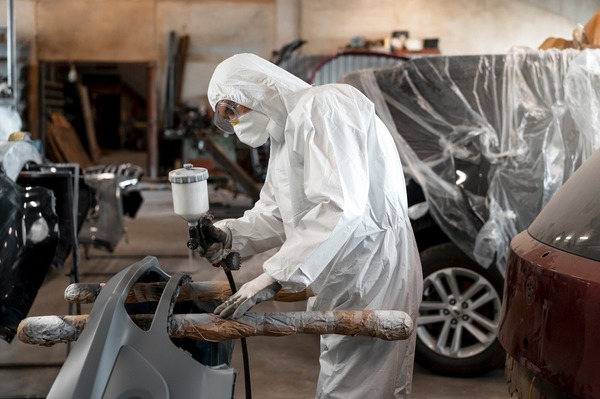
At Chembond, we help project teams align coating methods with site demands, taking into account surface type, project scale, application environment, and required finish quality.
Here’s how common application methods stack up:
| Method | Best For | Notes |
|---|---|---|
| Brush & Roller | Small areas, touch-ups, corners | Cost-effective but limited finish control |
| Air Spray | Uniform finish on large, open surfaces | Requires controlled conditions |
| Airless Spray | Structural steel, tanks, high-volume work | High efficiency, good film build |
| Powder Coating | Shop-applied systems with curing ovens | Solvent-free, durable finish, needs controlled facility |
| E-Coating | Automotive, machine parts, complex shapes | Excellent for recessed areas, electrically applied |
| Hot-Dip Galvanizing | Steel exposed to moisture or coastal conditions | Excellent corrosion resistance, pre-fabricated steel only |
Here’s how common application methods stack up:Our application support teams provide technical guidance on film thickness, curing times, environmental limitations, and equipment compatibility, so coatings perform as designed, not as hoped.
Surface Preparation – The Foundation That Can’t Be Skipped
No coating (no matter how advanced) can perform on a dirty, oily, or unconditioned surface. Surface prep isn’t optional; it’s non-negotiable.
Why Prep Matters
Coating adhesion depends entirely on surface cleanliness, profile, and moisture levels. Skipping or rushing prep often leads to:
- ✓ Blistering and delamination
- ✓ Premature corrosion
- ✓ Underfilm rust or flaking
- ✓ Voided warranty or compliance failures
Our Surface Preparation Process
Depending on the substrate and coating type, we advise and assist with the following:
- ✓ Degreasing & Cleaning: Removes oils, process residues, and contaminants
- ✓ Abrasive Blasting: Creates anchor profile for steel, removes rust and mill scale (typically SA 2.5 standard)
- ✓ Chemical Etching: For concrete and non-metallics requiring pH balancing or surface activation
- ✓ Moisture Testing: Especially critical on concrete prior to epoxy or urethane coating systems
- ✓ Primer Matching: Our zinc-rich epoxy primers are often the first line of defence, especially where corrosion starts fast
When working with clients, we often integrate prep steps into the coating system design, because even the right coating fails if it’s not given a surface it can grip.
Budget vs. Performance – Making Smart Investments
The real cost of a coating isn’t in the drum, it’s in the lifecycle it supports or shortens. Cut corners during selection, and the spend comes back tenfold in repairs, rework, or worse: unplanned downtime.
What Budgeting Should Actually Include
When we advise clients, we look beyond material costs. Here’s what gets factored in:
- ✓ Surface prep and labour
- ✓ Downtime or production halts during application
- ✓ Coating lifespan under real conditions
- ✓ Maintenance and inspection frequency
- ✓ Risk of failure in high-stress zones
Choosing a higher-performance coating may increase upfront spend, but if it extends recoating intervals or reduces maintenance cycles, it lowers the total cost of ownership.
At Chembond, we work with clients to balance both, cost-effectiveness and performance . There’s no “cheap win” in protective coatings, only well-informed trade-offs.
Environmental Responsibility Without Cutting Performance
Industrial coatings must do more than just last, they need to be applied, used, and retired without harming the environment they’re supposed to protect.
How We Address Coating Sustainability
Environmental compliance isn’t an add-on, it’s part of the system. Our portfolio includes products that are:
- ✓ Low-VOC and solvent-free , reducing site exposure risk
- ✓ Lead- and heavy-metal-free , aligning with global safety norms
- ✓ Formulated for safer application , especially in enclosed or sensitive work areas
We also support powder coating systems where applicable, ideal for shop-applied components, with minimal waste and no solvent use .
Disposal matters too. We guide clients on safe handling, storage, and disposal per regulatory guidelines. It’s not just ticking compliance boxes, it’s about responsibility across the coating’s lifecycle.
When to Ask an Expert
There’s a point where product specs and datasheets stop being helpful, especially when coatings are applied in critical infrastructure, aggressive chemical zones, or systems with tight regulatory oversight.
That’s when experience matters more than labels.
Scenarios That Demand Expert Input:
- ✓ Complex substrates (e.g. stainless steel, galvanised metals)
- ✓ Multi-layer systems with primers, intermediates, and topcoats
- ✓ Coatings for potable water or food-contact zones
- ✓ Installations with limited downtime or special application constraints
- ✓ Coastal, offshore, or thermally cycled environments
At Chembond, we work directly with project engineers, contractors, and plant managers across India to design and validate coating systems that fit their specific applications. Our technical support includes:
- ✓ Site-level assessment and system recommendation
- ✓ Selection of coating based on exposure mapping
- ✓ Film thickness planning and application method advice
- ✓ Compatibility checks with primers or substrates
- ✓ Guidance on inspection and long-term maintenance planning
You don’t need to know every chemical bond, but you do need to work with people who understand what your project demands.
Your Coating Choice Defines the Outcome
When coatings fail, it’s rarely due to one big mistake. It’s usually a series of assumptions, overlooked prep, mismatched material, and underestimating stress that end up costing more than expected.
Choosing the right coating is about knowing the job site, understanding the threats, and picking protection that actually holds up under real conditions.
At Chembond Material Technologies, we build systems that match India’s environments, substrates, and regulatory needs. Our approach is straightforward: define the problem, recommend the right solution, and support it through to performance.
Let’s help you choose the coating that fits the job and get it right from the start.
Frequently Asked Questions (FAQs)
1. How do I compare coating systems from different manufacturers?
Look beyond the datasheet. Focus on performance testing under comparable conditions, field case studies, and third-party certifications. Ask for service history in environments similar to yours, not just lab results. Also check for after-sales technical support, especially for complex installations.
2. Can I apply a new coating over an existing one, or does it need full removal?
It depends on the existing coating’s condition and chemistry. In many cases, re-coating is possible if the original layer is well-adhered and compatible. But if there’s peeling, blistering, or unknown material underneath, full surface prep is recommended. Always test adhesion before deciding.
3. What early signs indicate a coating system might fail prematurely?
Watch for surface dulling, chalking, micro-cracking, or discolouration. These are often precursors to more serious breakdowns like delamination or corrosion creep. If caught early, targeted touch-ups or preventive recoats can extend system life without full remediation.